

Our latest adventure as recounted by a client journalist:
For this weeks adventure we took a trip to the ancient pueblo village of Keet Seel, one of the oldest and well preserved Pueblos in America. We departed from Hunter House Sunday morning around 8:30am and went to an AA meeting in Flagstaff. After the meeting we drove about three hours towards Kayenta, Arizona. Once we arrived at the Navajo National Monument we quickly set up camp then attended an orientation session at the ranger station. The park rangers gave a quick and informative overview of the 8.5 mile backpack to Keet Seel that we had planned for Monday morning. After the orientation we headed back to camp where a few people prepared a teriyaki chicken stir fry for dinner while the other competed in a corn hole tournament. Once dinner was over, we did a quick mediation under the stars then went to bed
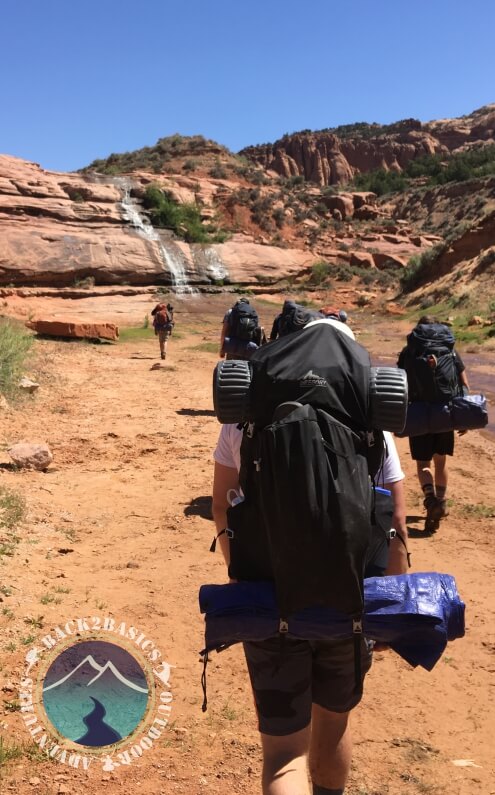
Bright and early Monday morning, we woke up enjoyed a quick breakfast then prepared for the backpack into Keet Seel. From the trailhead, we hiked 8.5 miles through multiple canyons. We saw wild horses and cattle in the canyons. About 5.5 miles in we got to a small waterfall and took a break, cooling off in the water. After another hour of hiking we made it to the Keet Seel campgrounds which were perched high on top of the canyon overlooking a stream and the ancient village of Keet Seel. After setting up camp, we had a snack and made our way to the ranger station where two rangers live for a month at a time.
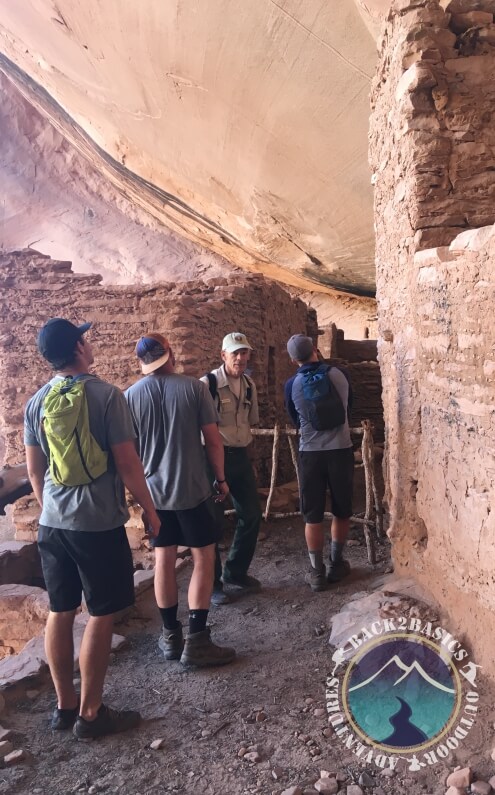
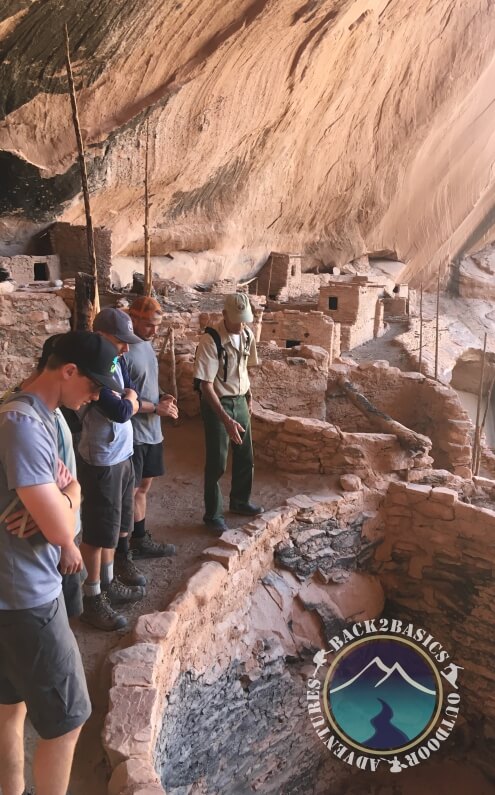
The ranger, Steve, who gave us a tour was actually the grandson of one of the original archeologists of Keet Seel. Needless to say, he was extremely knowledgeable in answering all of our questions in a detailed fashion. The enter into Keet Seel, we had to climb a 70 foot ladder – luckily none of us are afraid of heights (everyone is afraid of heights). We toured around the ancient village which is the most impressive pueblo village I have ever seen. Keet Seal has stayed so well preserved because of its location in the canyon underneath an overhanging wall. It is built into the side of an area of the canyon where no water can effect it. The village itself it comprised of over 150 ruins most of which were used to store food. Our tour guide explained that no one is really sure why the village was abandoned by its clients but most speculated that erosion began to make farming the land too difficult to sustain their needs the term for this event is “undercutting”. Steve went on further to explain that the American Southwest is presently in a phase of undercutting in which there are long periods of drought accompanied by flooding events, all of which combine to produce heavy erosion in canyons. After the tour, we went back to camp to eat dinner and prepare for our trek back to the van in the morning.
Tuesday morning, we woke up earlier than usual in order to complete the 8.5 mile hike before the temperature got too hot. During our orientation, the rangers told us to expect the hike back, which has more uphill elevation gain, to take an hour or so longer than the hike in. We ended up hiking out and getting back to our van 2 hours faster than our hike in. Needless to say, we were all tired and hungry once back in the van. We drove back to Flagstaff, derigged the vans, cleaned our backpacks and started preparing for our next adventure.


